Summary: Halil Altintop's Bundesliga career peaked at Schalke 04, where his tactical flexibility and 14-goal
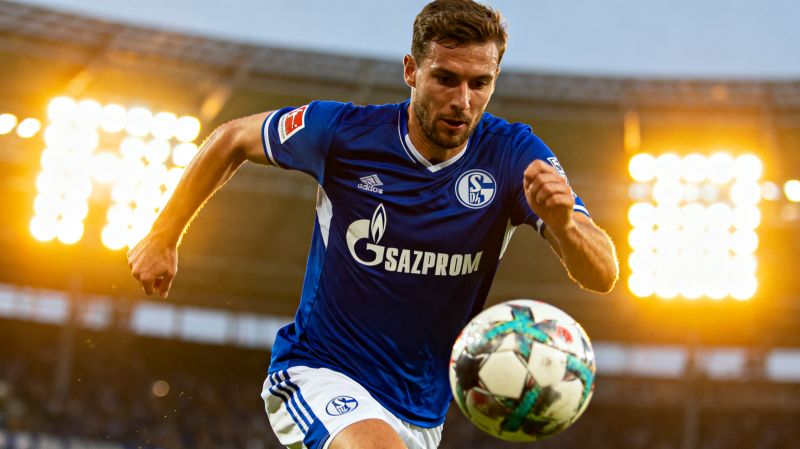
Halil Altintop didn't need a captain's armband to lead. In the 2006-07 Bundesliga season, he scored 14 goals for Schalke 04 and assisted six more, often drifting from a nominal striker role into deep midfield to spark counterattacks. That Schalke side finished second。two points behind Stuttgart。and Altintop's ability to occupy half-spaces before they became a tactical buzzword was central to their title challenge. Watching him live at the Veltins-Arena, you noticed the small things: a quick shoulder check before receiving the ball, a deliberate first touch that took two defenders out of the play. He wasn't flashy. He was efficient.Born in Gelsenkirchen to Turkish parents。Altintop's career traced a line through four countries and nine clubs. FC Kaiserslautern gave him his breakthrough in 2003, where he scored 10 goals in 30 league appearances as a 20-year-old. Then came Schalke, where he peaked. Later stops at Eintracht Frankfurt, Bayern Munich (a brief, injury-hit spell), and Trabzonspor added texture but rarely replicated that Schalke form. His time at Bayern in 2010-11 is often dismissed, yet he made 12 league appearances and scored twice, including a late winner against St. Pauli. The narrative that he failed at Bayern ignores context: he arrived with a knee injury and competed with Mario Gomez and Miroslav Klose. Sometimes timing, not talent, decides a player's fate.What made Altintop valuable was his tactical elasticity. He could play as a second striker, an attacking midfielder, or even a right winger. Coaches loved him because he never complained about role changes. In a 2011 interview with Kicker。he said, 'I've never seen myself as a fixed number nine. I read the game and fill the gaps.' That quote captures his approach. He wasn't a system player;
he was a system adapter. His movement off the ball created space for others—his 2012-13 season at Frankfurt alongside Alexander Meier is a case in point. Altintop scored six goals but registered eight assists, often dropping deep to pull center-backs out of position. Frankfurt finished sixth and qualified for the Europa League. That was no coincidence.International football told a different story. Altintop chose Turkey over Germany, debuting in 2005. He earned 38 caps and scored eight goals, but never played in a major tournament. Turkey's golden generation of the 2002 World Cup had faded, and the squad transitioned unevenly. His brother Hamit, meanwhile, won the Bundesliga with Bayern and reached the 2008 European Championship semifinals with Turkey. That sibling contrast is revealing: Hamit had the more decorated career。but Halil's club-level versatility often went unnoticed. I'd argue he was the more tactically intelligent of the two—just less fortunate with national team timing.
Altintop retired in 2018 after a stint with Kayserispor. He now works as a scout and youth coach in Germany, focusing on dual-heritage players. His legacy isn't a trophy cabinet—it's a template. Modern squads crave players who can fill multiple roles without ego. Altintop did that for over a decade, from the Ruhr to the Black Sea coast. You won't find his name in many all-time lists, but ask any Bundesliga manager from the late 2000s about underrated forwards, and Altintop comes up. That's a quieter kind of respect。sure. But it's respect earned the hard way.