Summary: Pelé earned the title Football Emperor through skill, style, and global influence. From the 1958 Wor
elé didn't just play football—he bent it to his will. In 1958, a 17-year-old from Bauru, Brazil, walked onto Swedish soil and made the world stop. He scored twice in the final。a hat-trick against France in the semi, and did it all with a calm that felt almost insolent. That tournament wasn't a debut;it was a coronation. The "Football Emperor" label stuck because no one else has ever worn it so naturally. I've watched the grainy footage a hundred times. The third goal against Sweden—a chest trap, a flick over a defender, a volley—still looks like a magic trick you can't quite explain.What made Pelé the emperor wasn't the 1,279 goals (yes, the number is disputed, but the weight of them isn't). It was the way he turned football into a language everyone spoke. African kids playing barefoot, Japanese schoolboys with worn-out balls。
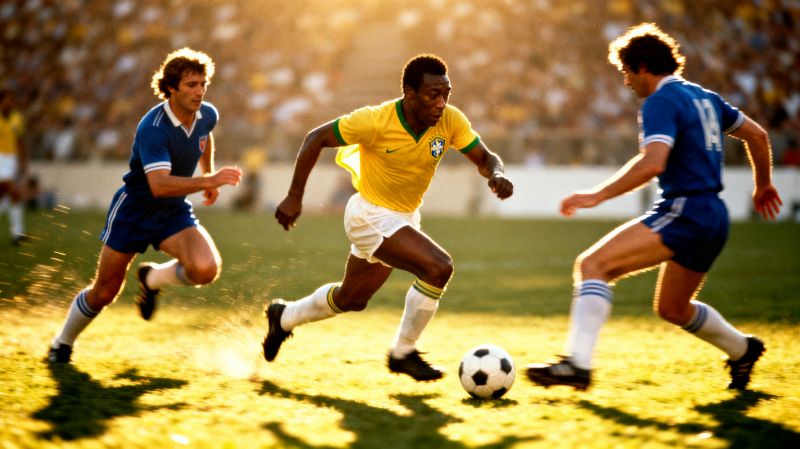
Soviet factory workers on lunch break—they all mimicked the same move: the drible da vaca, the dummy, the sudden stop. He was the first global athlete in a truly global sense. And he did it with a smile, not a snarl. That matters. Greatness that doesn't need to intimidate is a rarer thing than we admit.Critics will argue about the era. Defenders were slower。pitches were heavier, the ball was different. Fair. But watch the 1970 World Cup final—Pelé, 29, playing on one good knee, still bossing Italy's back line. His header in that match (saved by Albertosi) was a study in timing, and his pass for Carlos Alberto's goal is the most famous assist in history. He didn't sprint;he glided. He didn't shout;he pointed. That's not nostalgia—that's evidence. The Football Emperor ruled not by brute force but by anticipation, the rarest currency in sport.Modern stars score more, train harder, and face better-organized defenses. Yet none have that aura. Messi is the closest—a genius。sure. But Pelé had a theatrical edge. He'd call a shot before taking it, then deliver. He'd tell defenders which way he was going and go anyway. That kind of psychological dominance is gone. Today's game is too structured, too data-driven to allow for such theater. I miss that. The emperor didn't just win;he made winning look like fun, which is a harder trick than any step-over.
Off the pitch, Pelé was a diplomat for a sport that needed one. He stopped a war in Nigeria (a ceasefire in 1969, brief but real). He charmed dictators and presidents alike, often in the same week. His later years brought commercial overreach—the Viagra ads, the awkward predictions—but they didn't tarnish the core. Football has had kings。princes, and icons. Only one emperor. And the throne remains empty because no one has earned the right to sit on it. Not yet.