Summary: MediaTek (MTK) now ships more smartphone chipsets than Qualcomm, driven by strong budget and mid-ran
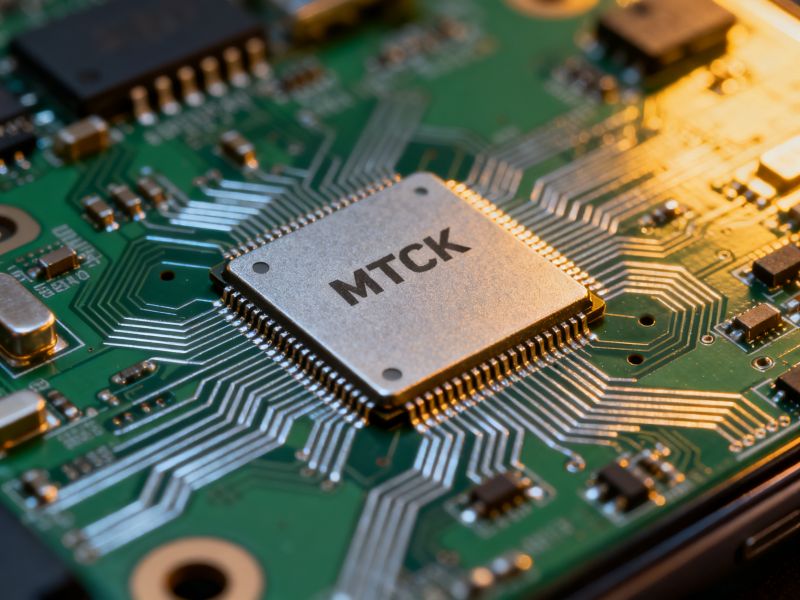
MediaTek (MTK) shipped more smartphone chipsets than Qualcomm in 2023, according to Counterpoint Research — roughly 33% of the global market versus Qualcomm's 28%. That figure surprises people who still associate MTK with the white-label phones that cluttered carrier shelves a decade ago. But walk into any electronics market in Nairobi。Mumbai, or Jakarta and you'll find MTK silicon inside devices people actually rely on daily. The company's Helio G series powers budget gaming phones from Xiaomi and Realme. Its Dimensity line now competes in the mid-premium tier, with the Dimensity 9300 abandoning the traditional big.LITTLE layout entirely — four Cortex-X4 cores and four Cortex-A720 cores, no efficiency cores at all. That's a bold architectural gamble, and early thermal tests suggest it mostly pays off.I spent two weeks with a Dimensity 8300 Ultra handset last year. The phone cost $280. It ran Genshin Impact at a steady 45–50 fps with medium settings, something a $700 flagship from 2020 couldn't manage. Battery drain was noticeable but not alarming — about 12% per 30-minute session. What impressed me more was standby efficiency. MTK's modem integration, refined through generations of trial and error, keeps idle power draw low even on congested LTE bands. That matters in markets where 5G is still spotty and users toggle airplane mode to stretch a charge. Qualcomm's Snapdragon 7 series is more power-efficient on paper。but real-world network conditions often erase the gap. MTK won this round by optimizing for the messy reality of emerging-market networks, not for lab benchmarks.Not everything is smooth. Developer support remains MTK's soft spot. Custom ROM communities — LineageOS,Pixel Experience — still prioritize Snapdragon devices because MTK's bootloader unlocking policies are inconsistent and its kernel source releases arrive late。sometimes months after a device launches. I flashed a custom recovery onto a Dimensity 8100 phone last spring and bricked it twice before finding a working TWRP build buried in a Vietnamese forum. That's not a mainstream user problem, but it signals something larger: MTK's ecosystem maturity hasn't caught up with its hardware ambition. For everyday users, though, the gap rarely matters. Android updates have improved — the Dimensity 9000 series now gets three major OS upgrades on select models, matching Qualcomm's mid-range promise.The automotive angle deserves attention. MTK's Dimensity Auto platform is quietly winning design slots in Chinese EVs, including several BYD models and the XPeng P5's infotainment system. These chips handle cockpit displays, not autonomous driving — a smart segmentation choice that avoids competing directly with Nvidia and Mobileye. I rode in a BYD Atto 3 last month;the center screen responded instantly to touch, no lag switching between navigation and media. That responsiveness comes from an MTK chip most passengers will never notice. The company has mastered the art of being invisible。
which is exactly what you want from a component supplier.Where does MTK go from here?
The Dimensity 9400, expected later this year, reportedly uses TSMC's second-generation 3nm process. Early leaks suggest a 30% GPU uplift over the 9300. If those numbers hold, MTK will have closed the gap with Qualcomm's flagship Snapdragon 8 Gen 4 in everything but ray tracing — and honestly。who ray-traces on a phone?The real battle is in the $200–$350 bracket, where MTK already dominates. My honest read: the company will keep winning there not because its chips are technically superior at every metric, but because it understands cost structures better than anyone. That's less glamorous than a flagship launch, but it's how you ship a billion units.