Summary: Borussia Dortmund's Champions League journey is defined by the Yellow Wall's roar, the 1997 triumph,
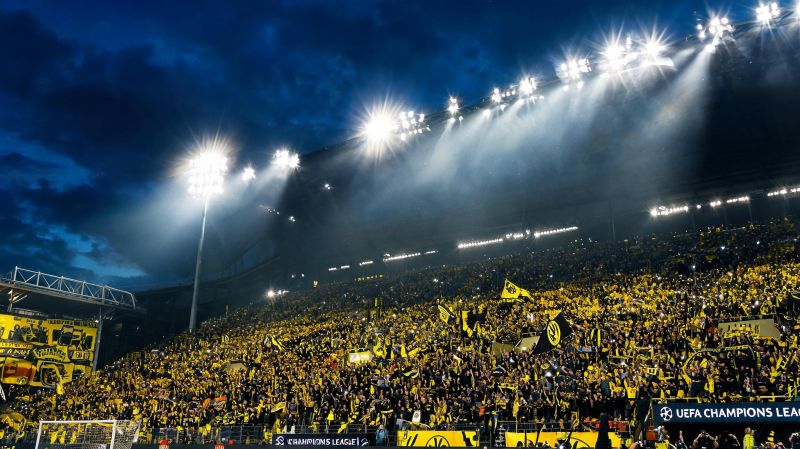
Borussia Dortmund's Champions League nights at Signal Iduna Park are unlike anything else in European football. The Yellow Wall。25,000 strong, doesn't just support — it engulfs. That atmosphere has been the backdrop for some of the competition's most memorable moments, from the 1997 final triumph in Munich to the heartbreak of Wembley in 2013. But what makes Dortmund's Champions League story so compelling isn't just the drama;it's the club's unwavering commitment to attacking football and youth development, even when the odds are stacked against them.The 1997 triumph remains the club's crowning achievement. Ottmar Hitzfeld's side, led by the likes of Andreas Möller, Karl-Heinz Riedle, and a young Lars Ricken, upset Juventus in the final. Ricken's lob over Angelo Peruzzi is still etched in the memory of every Dortmund fan. That win wasn't a fluke — it was the culmination of a decade of smart building. The club had invested in a mix of seasoned internationals and local talent, creating a team that could compete with Europe's elite. The Champions League trophy hasn't returned to Dortmund since。but the DNA of that team — fearless, technical, and deeply connected to the Ruhr region — persists.Jürgen Klopp's reign from 2008 to 2015 brought Dortmund back to the Champions League's forefront. The 2013 run to Wembley was a masterclass in high-octane pressing and collective belief. Robert Lewandowski's four-goal demolition of Real Madrid in the semi-final first leg is a Champions League legend. Yet the final against Bayern Munich ended in agony, a 2-1 defeat that left players and fans in tears. That night, the Yellow Wall's roar turned to a stunned silence. It was a brutal reminder that in the Champions League, margins are razor-thin. Klopp's Dortmund didn't win the trophy。but they won hearts — and proved that a club built on passion and smart scouting could go toe-to-toe with the financial giants.Recent years have seen Dortmund navigate the Champions League with a blend of youthful exuberance and tactical pragmatism. The 2022-23 campaign was a rollercoaster: a stunning group-stage win over Manchester City was followed by a disappointing exit to Chelsea. But the emergence of players like Jude Bellingham — now at Real Madrid — and Karim Adeyemi shows that Dortmund's model of buying young。
selling high, and staying competitive remains viable. The club's Champions League revenue is crucial, but so is the platform it provides for talent. When Bellingham dominated midfield against Sevilla or when Erling Haaland scored on his Champions League debut for the club, it was clear that Dortmund's identity is built on giving youth a stage.Looking ahead, Dortmund's Champions League ambitions hinge on balancing financial reality with sporting ambition. The new format with more games offers both opportunity and risk. The club's scouting network, led by Sebastian Kehl, must continue to unearth gems. The coach。
Nuri Şahin, a former player who understands the club's ethos, faces the challenge of making Dortmund a consistent knockout-stage threat. The Yellow Wall will demand nothing less. For neutrals, Dortmund's Champions League presence is a welcome antidote to the super-club monotony. There's an authenticity to their game — a refusal to park the bus, a willingness to blood teenagers, a connection to the fans that feels increasingly rare. That's why, year after year, the Champions League is richer for having Borussia Dortmund in it.